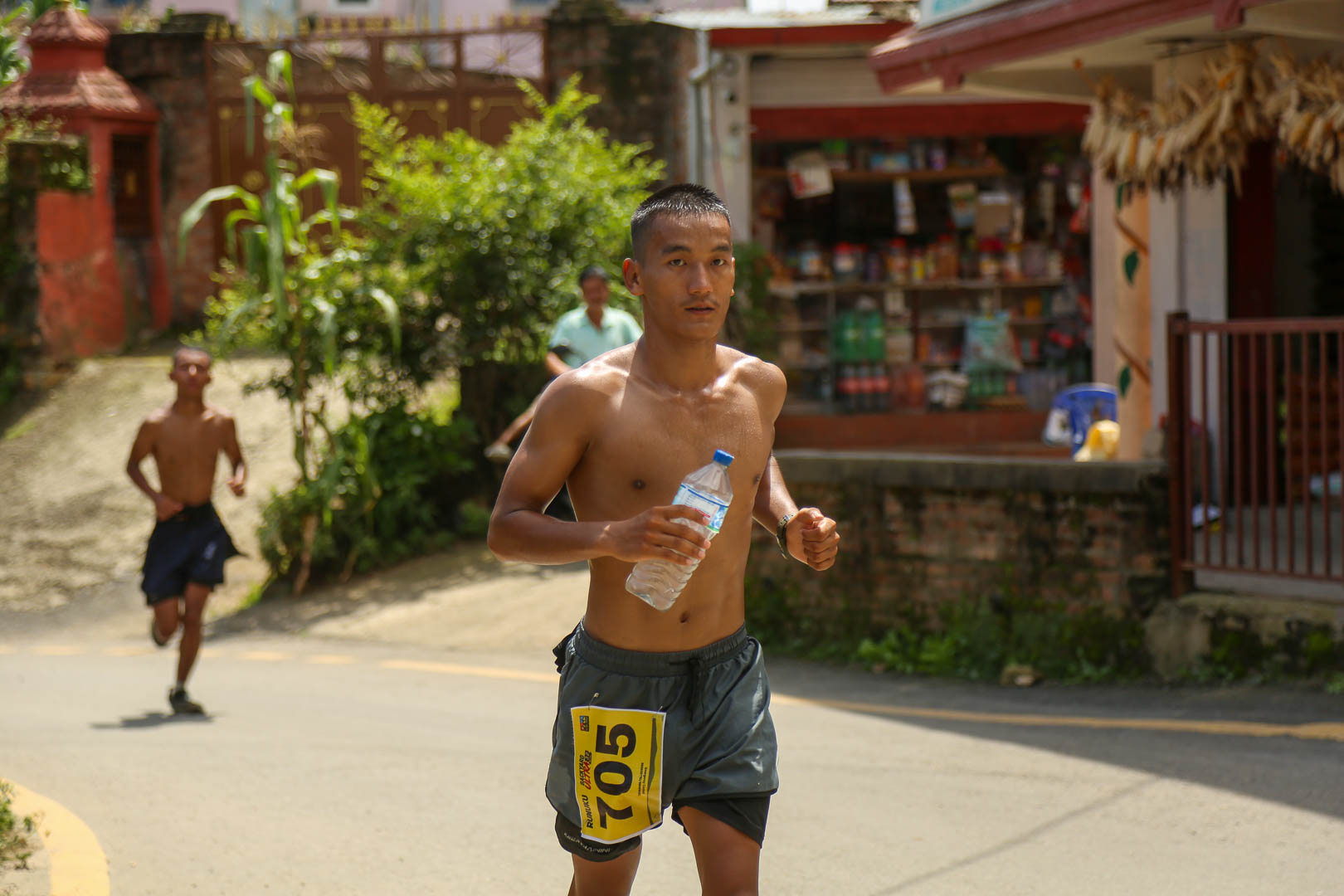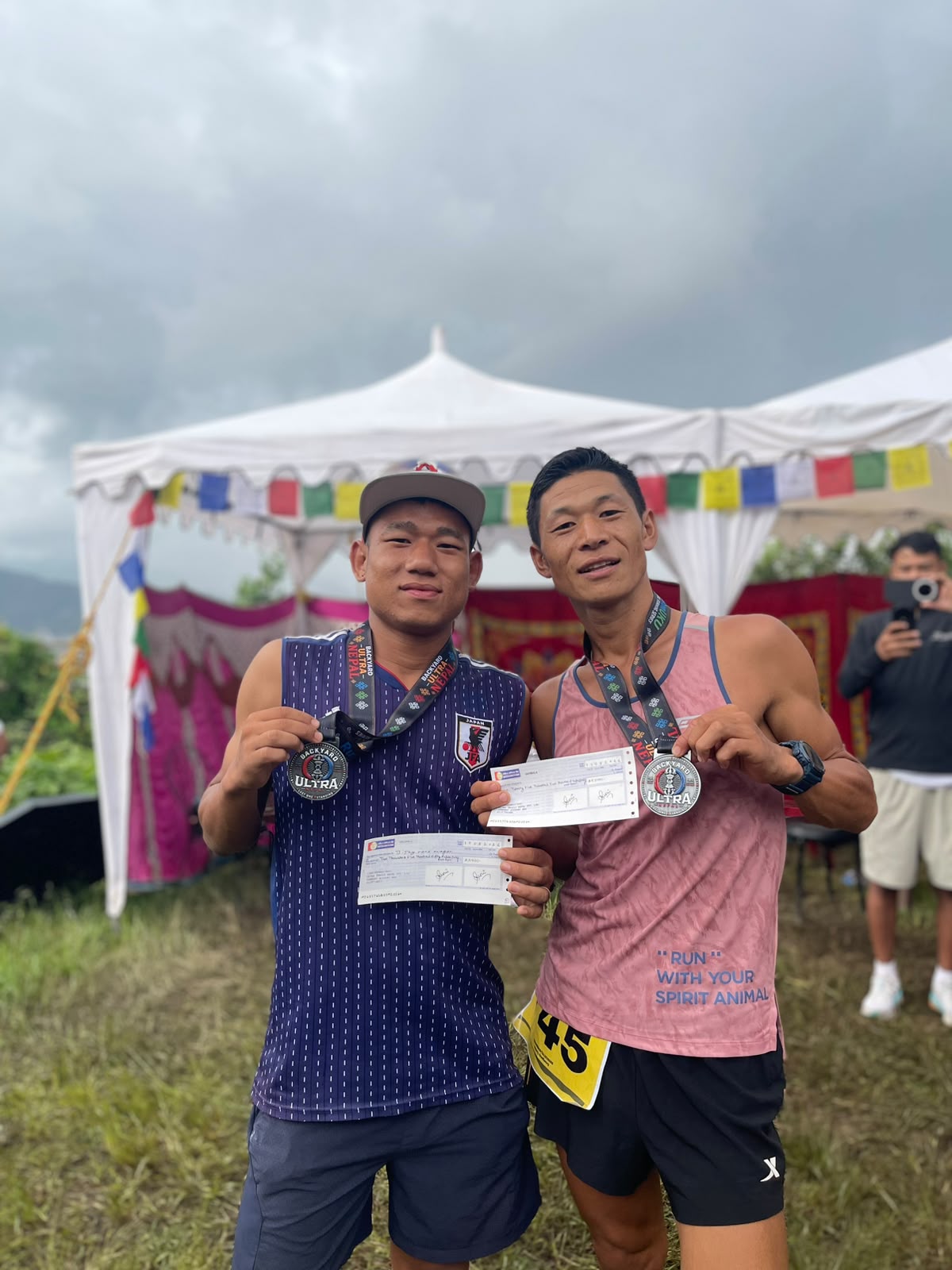
Nepal is already known around the world for Everest, Himalayan trekking, trail running and high-altitude adventure. But a new form of endurance sport is beginning to create its own story in the country: Backyard Ultra.
Unlike a conventional ultramarathon, where runners race toward a fixed finish line, a Backyard Ultra has no predetermined finishing distance. Instead, athletes must repeatedly complete a 6.706-kilometer (4.167-mile) loop within one hour. At the beginning of every hour, everyone starts again. The race continues until only one runner remains capable of completing the next loop.
In Kathmandu, this unusual and brutally simple format has already produced a memorable chapter through Arjun Kulung Rai, who established the first Kathmandu Backyard Ultra course record with 21 completed loops. His performance helped introduce a new level of endurance competition to Nepal and demonstrated that Nepali runners can adapt to one of the world's most mentally demanding race formats.
Today, Backyard Ultra is growing beyond a single race. With new competitions, national-team ambitions and an upcoming international championship pathway, Nepal has the opportunity to develop Backyard Ultra into a distinctive part of its sports and adventure-tourism identity.
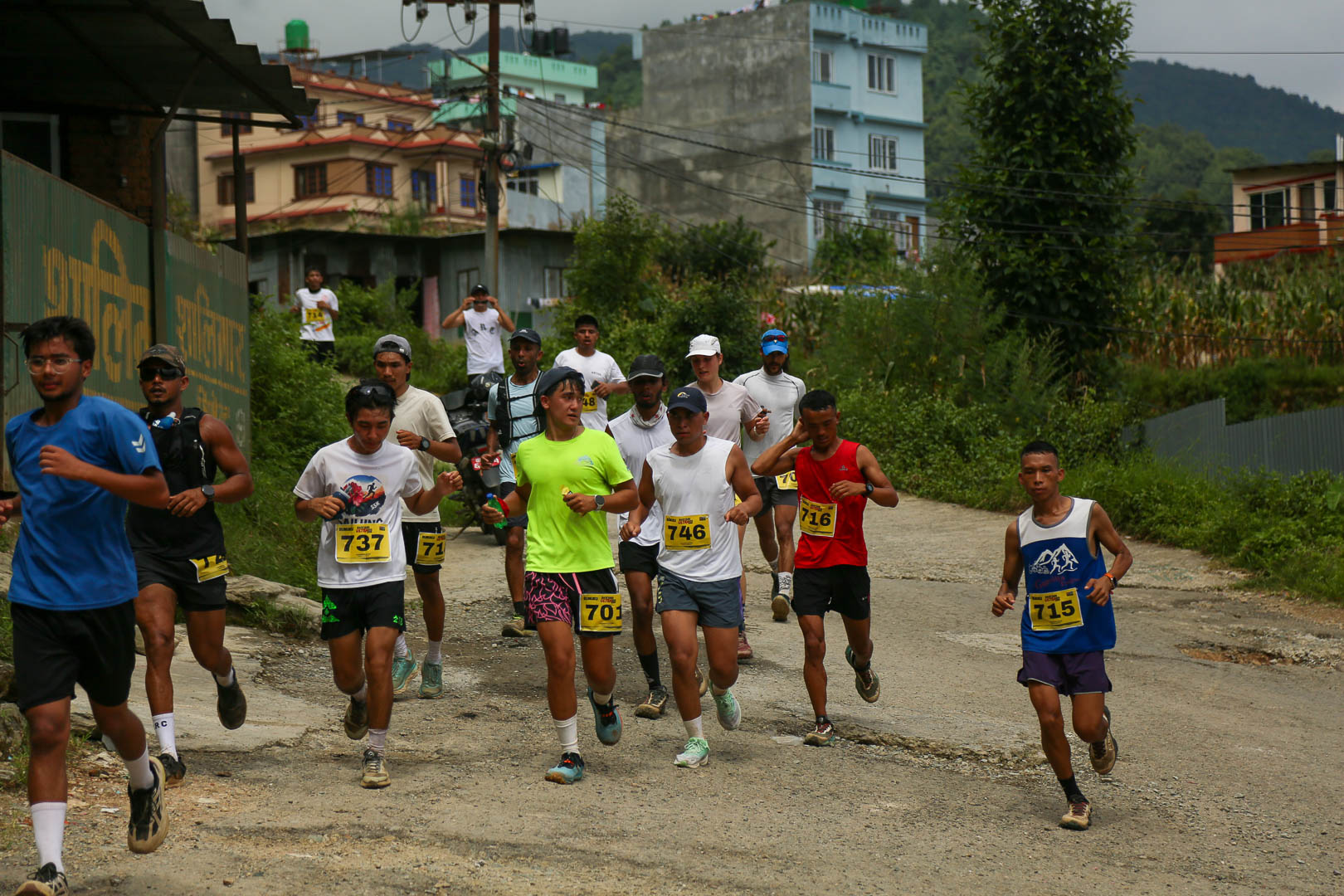
What Is a Backyard Ultra?
A Backyard Ultra is an endurance race based on repetition rather than a fixed finish line.
Every hour, runners must complete one loop of approximately 6.706 km. They must return to the start before the hour ends. The remaining minutes can be used for eating, drinking, changing clothes, recovering or simply preparing mentally for the next start.
Then the next hour begins.
There is no traditional finish line.
There is no target distance.
And there is usually no predetermined race duration.
The competition continues until one runner completes a loop that no other remaining competitor can complete. That final runner becomes the winner.
The format was created by American race director Gary "Lazarus Lake" Cantrell, best known as the creator of the Barkley Marathons. The original Big's Backyard Ultra began in Tennessee in 2011 and has since inspired Backyard Ultra races around the world.
The concept is deceptively simple:
Run 6.706 km. Return within one hour. Rest. Start again. Repeat until everyone else stops.
That simplicity is what makes the race so difficult.
Why Is Backyard Ultra So Different?
Most ultramarathons are about managing a known distance. A 50K is 50 kilometers. A 100K is 100 kilometers. A 100-mile race has a fixed finish.
Backyard Ultra removes that certainty.
A runner completing 10 loops has covered approximately 67 km. At 20 loops, the distance is approximately 134 km. At 24 loops, the runner reaches roughly 161 km—equivalent to 100 miles.
But the race does not necessarily end there.
This creates a unique psychological challenge. Runners cannot simply tell themselves, "I only have 20 kilometers left."
Instead, the question is always:
Can I do one more loop?
That repeated decision is central to the philosophy of Backyard Ultra.
The Beginning of Backyard Ultra in Kathmandu
Nepal's Backyard Ultra story gained attention with the first Backyard Ultra event held in Kathmandu.
One of the athletes who made an immediate impact was Arjun Kulung Rai.
According to the International Trail Running Association's record for the subsequent Backyard ULTRA Nepal 2.0 event, the first Kathmandu event produced a course record of 21 loops by Arjun Kulung Rai. The record was particularly notable because it came on his first attempt at the format.
Twenty-one loops represents approximately:
21 × 6.706 km = 140.8 km
That means Arjun's Kathmandu performance required more than 140 kilometers of running, but the distance alone does not fully explain the challenge.
He had to complete every loop within its individual one-hour window.
After each loop, the clock reset.
Then he had to start again.
And again.
And again.
His performance became an important early benchmark for Backyard Ultra in Nepal.
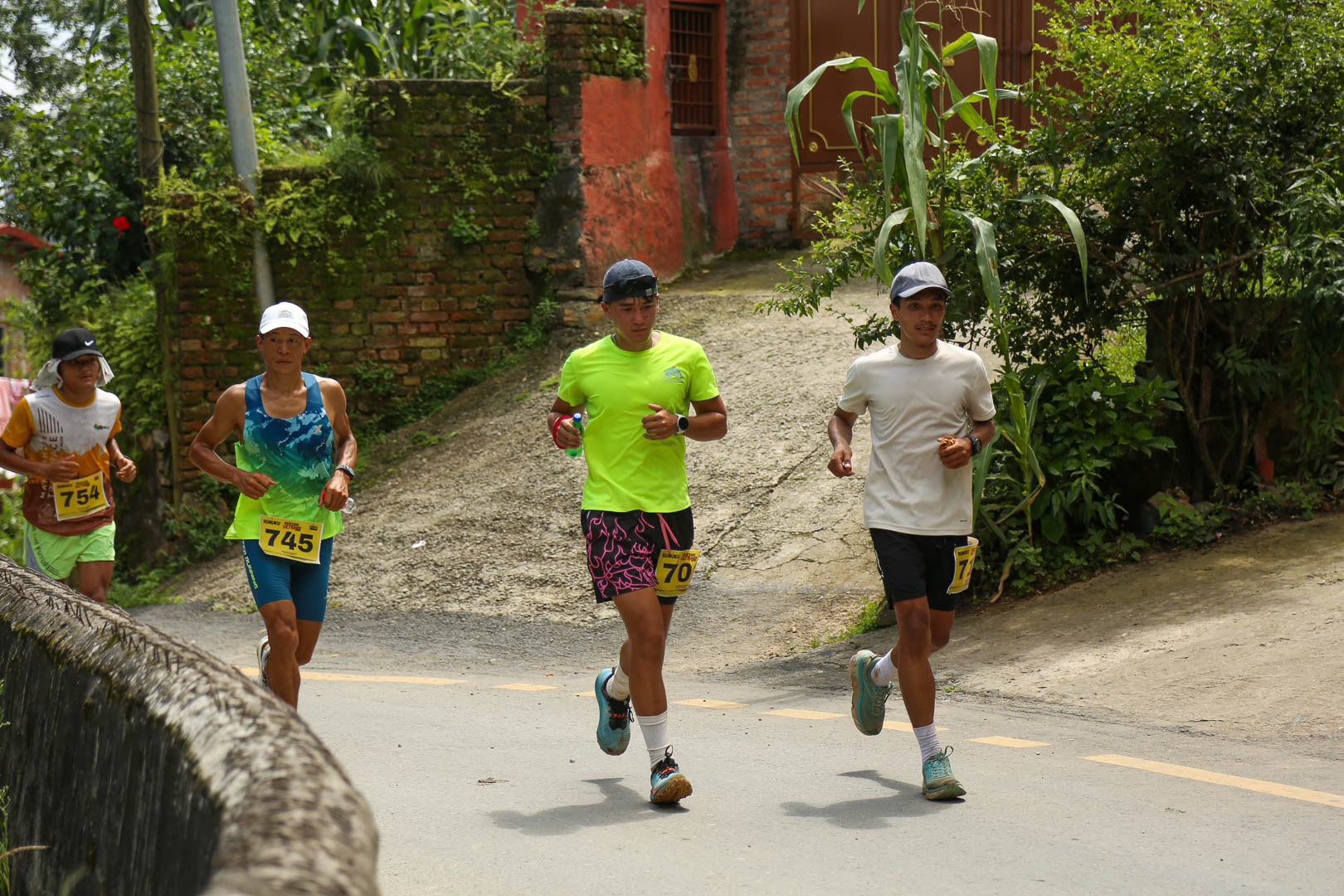
Arjun Kulung Rai and the 21-Loop Kathmandu Record
Arjun Kulung Rai's performance is significant because it helped establish the standard for Nepal's emerging Backyard Ultra community.
His 21-loop record demonstrated that Nepali ultra runners were capable of handling the unusual combination of speed, endurance, recovery and mental resilience demanded by the format.
The challenge is not simply running 6.7 kilometers.
A runner might comfortably complete the first several loops, but the accumulated fatigue becomes increasingly difficult as the hours pass. Sleep deprivation, nutrition, muscle soreness, changing weather and the psychological pressure of repeatedly returning to the starting line can eventually become more important than raw running speed.
Arjun's achievement therefore became more than a number.
It became a benchmark for the next generation of Nepali Backyard Ultra runners.
From Kathmandu to Pokhara: Backyard Ultra Nepal 2.0
The sport quickly expanded beyond its first Kathmandu edition.
The second Backyard ULTRA Nepal event was held in Pokhara on 14 June 2025. The event was registered with ITRA and attracted 50 participants. The course consisted of a repeated loop, with the race continuing according to the Backyard Ultra format.
The ITRA record shows how the distance accumulates with every additional loop:
The significance of the 24-loop mark is particularly important because 24 Backyard Ultra loops equal approximately 100 miles.
For the international Backyard Ultra ranking system, reaching at least 24 loops is an important benchmark.
The ITRA description of the Nepal event specifically noted that Arjun's 21-loop Kathmandu record did not meet the 24-loop threshold for the world ranking listing.
Nepal's Backyard Ultra Record Moves Forward
The story did not stop with Arjun's 21 loops.
According to Yardlore's Backyard Ultra statistics, Bijaya Rana Magar 25 loops and Milan Kulung Rai reached 24 loops in 2025, establishing a new Nepal record and reaching the 100-mile equivalent distance. Yardlore records this as a shared course record.
This is an important development for Nepal.
The progression tells a story:
Arjun Kulung Rai — 21 loops ↓ Bijaya Rana Magar 25 & Milan Kulung Rai — 24 loops
The benchmark has already moved from approximately 141 km to approximately 161 km.
And the next question is obvious:
How far can Nepal's Backyard Ultra athletes go?
Arjun Kulungs new 33 loops record
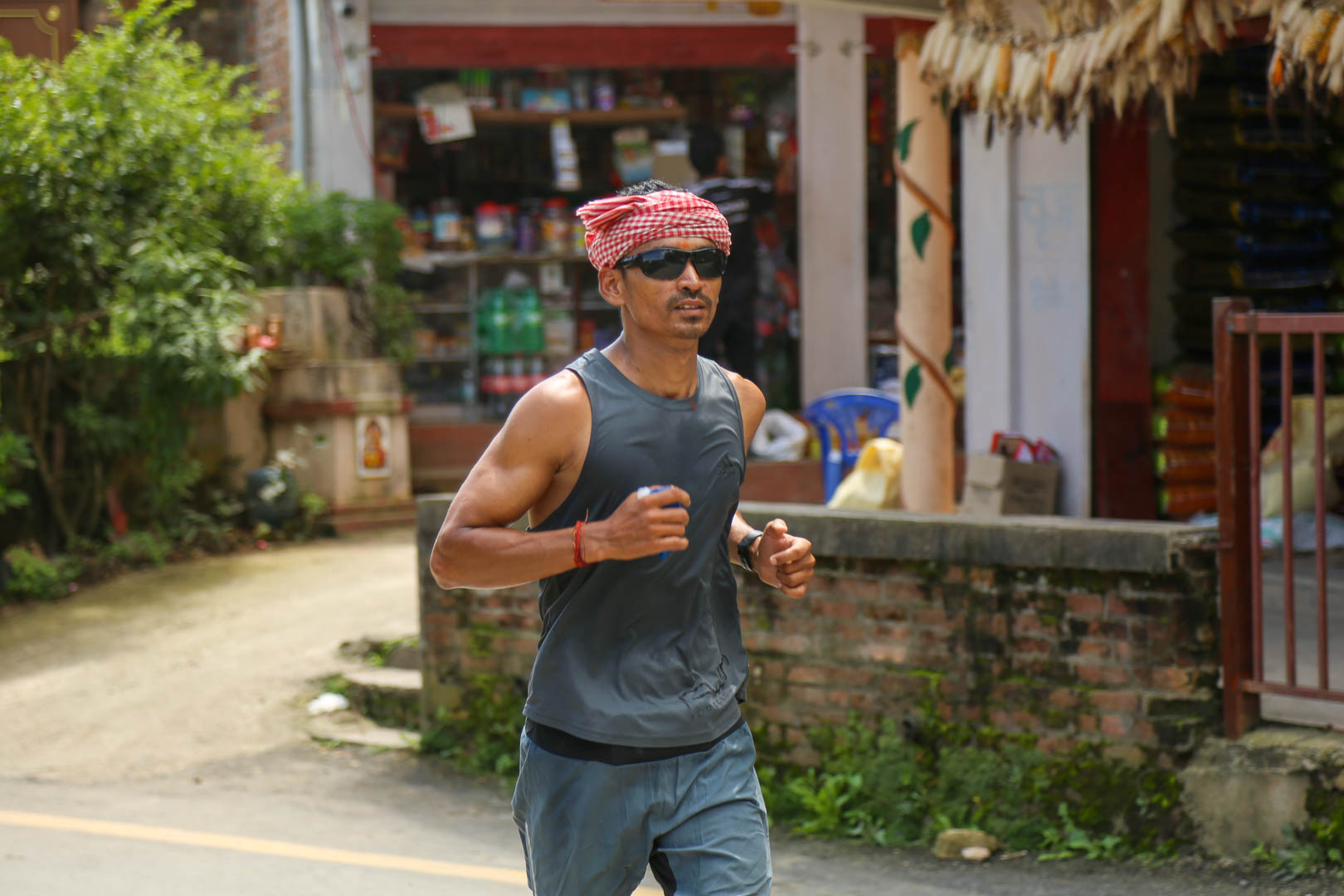
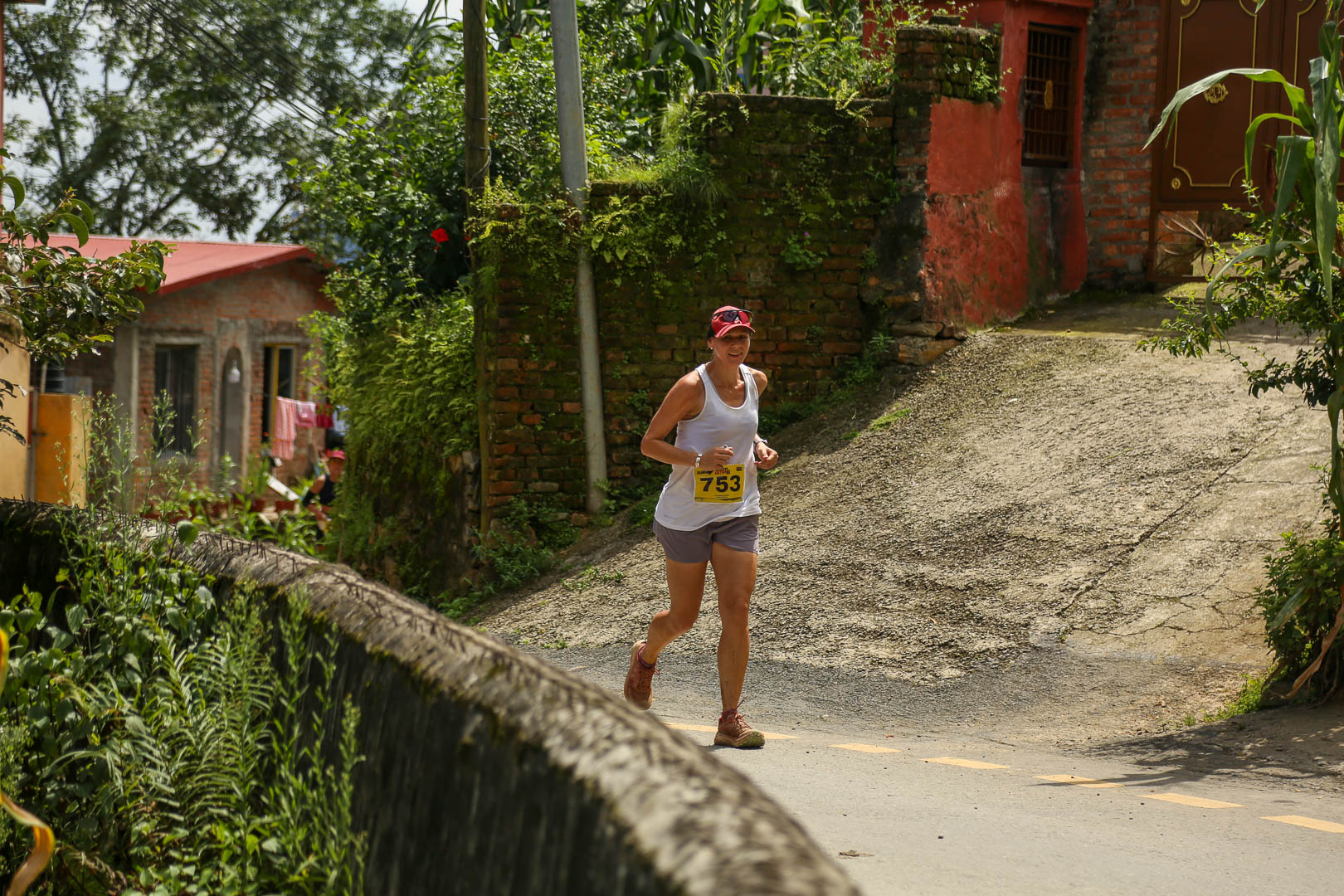
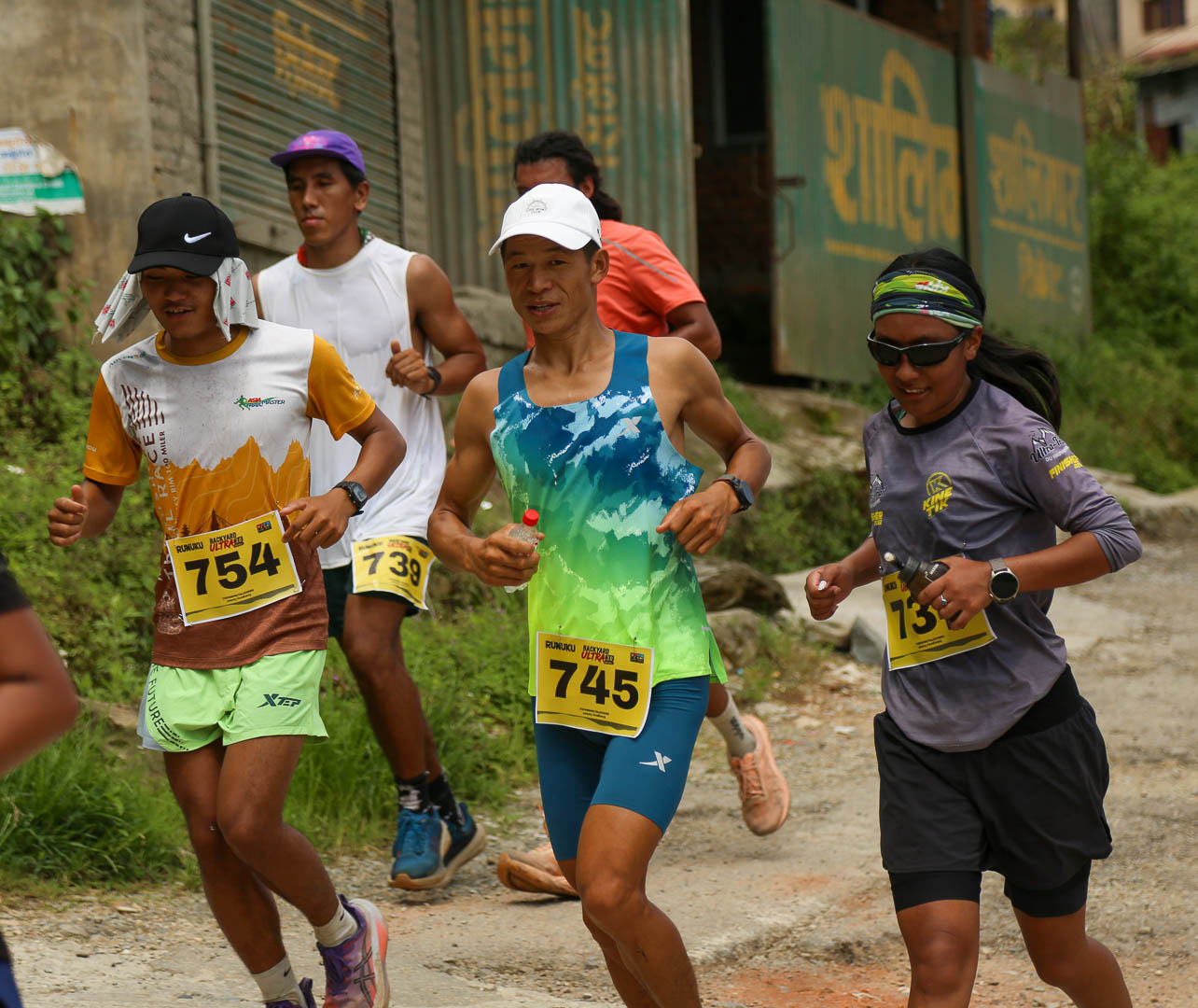
Backyard Ultra Nepal 2026 has marked a major milestone for ultra running in Nepal. Organized by Ultra Trails Nepal in Matchegaun, Chandragiri, Kathmandu, the event brought together 65 runners from Nepal, France, the United States, Denmark, Norway, Switzerland and other countries. Runners had to complete a 6.7-kilometer loop within one hour, with anyone failing to finish on time eliminated.
Arjun Kulung Rai, competing for Xtep, won the men's category after completing an impressive 33 loops, covering approximately 221 kilometers, and setting a new course record. The previous record of 32 loops was held by Hemanta Rana. In the women's category, Manju Sunuwar also created history by completing 14 loops, breaking the previous women's record of 12 loops. and Previous record holder Bijay Rana Magar stoped in 30th loop after he got triggered on his knee.
Backyard Ultra Nepal 3.0: A New Chapter
The next major step is Backyard ULTRA Nepal 3.0, scheduled for 15 August 2026 in Kathmandu.
The event is listed with a 100-runner capacity and a 6.7-kilometer-per-hour format. It is also being positioned as part of the pathway toward selecting athletes for Nepal's Backyard Ultra international team.
This makes the 2026 event particularly significant.
It is no longer simply about winning a local ultra.
It is becoming part of a national development pathway.
According to the official Big's Backyard Ultra listing, the 2026 Kathmandu event is intended to help identify strong athletes for Team Nepal ahead of the international team championship.
Team Nepal and the 2026 Backyard Ultra World Championship
One of the biggest opportunities for Nepali Backyard Ultra runners is the Big Dog's Backyard Ultra Team World Championship, scheduled for 17 October 2026.
The official Backyard Ultra listing identifies a Team Nepal satellite championship in Pokhara, with a planned capacity of 200 runners. Nepal's event is scheduled to take place simultaneously with other national satellite championships around the world.
The concept changes the sport from individual competition into national competition.
Runners are not only competing for themselves.
They are also contributing to the total performance of Team Nepal.
The stronger the depth of Nepal's team, the stronger Nepal's overall result can become.
The official event information describes the goal as building a strong national team with runners capable of reaching 30, 40, 50 or more loops.
That would put Nepali athletes on the same international stage as some of the world's strongest Backyard Ultra runners.
From Backyard Ultra Nepal to the World Stage
The 2026 pathway could also create an even bigger opportunity for Nepal's top athlete.
According to the official Backyard Ultra event information, the winner of Nepal's 17 October 2026 Satellite Championship will earn the title of National Champion and a place in the 2027 Big Dog's Backyard Ultra Individual World Championship in Tennessee.
That means Nepal could potentially produce an individual athlete competing at the original Backyard Ultra against some of the world's best endurance runners.
For a relatively young ultra-running discipline in Nepal, this is a major opportunity.
Why Nepal Is Perfect for Backyard Ultra
Nepal may seem better suited to mountain ultras, but Backyard Ultra has several characteristics that make it particularly promising here.
1. Nepal Already Has an Ultra-Running Culture
Nepal has developed a strong trail-running community over the past decade.
Nepali athletes regularly compete in trail races, mountain ultras and international endurance events.
Backyard Ultra gives these athletes another discipline in which to test themselves.
2. The Format Is Accessible
A Backyard Ultra does not necessarily require a remote Himalayan course.
A suitable loop can be established close to a city.
This makes it possible to organize races near Kathmandu, Pokhara and other tourism destinations without requiring participants to travel deep into the mountains.
3. It Is Spectator Friendly
A traditional 100-kilometer trail race can be difficult for spectators to follow because runners disappear into the mountains for hours.
Backyard Ultra is different.
The runners repeatedly return to the same start area every hour.
Spectators can watch the athletes arrive, recover, eat, prepare and start again.
That creates an atmosphere that could work particularly well for a sports festival.
4. It Can Combine Sport and Tourism
Nepal does not have to market Backyard Ultra simply as a running race.
It can become a sports-tourism experience.
International runners could come to Nepal for the race and extend their trip for trekking, cultural tourism, wildlife experiences or mountain adventures.
A foreign athlete arriving for a Backyard Ultra could spend additional days exploring Kathmandu, Pokhara, the Annapurna region, Everest, Langtang or other destinations.
That creates an opportunity to connect endurance sports with Nepal's much larger tourism industry.
Backyard Ultra as a Tourism Product
Nepal has traditionally marketed adventure tourism through trekking, mountaineering, rafting, paragliding and mountain biking.
Trail running is already becoming another important part of that ecosystem.
Backyard Ultra could add a different dimension.
Instead of selling only:
"Come to Nepal and run in the mountains,"
Nepal could also promote:
"Come to Nepal and experience one of the world's most challenging endurance formats."
The attraction is not necessarily the altitude.
It is the experience.
International runners could race during the day, experience Nepalese hospitality around the course and then explore the country after the competition.
This creates a potentially powerful combination of:
Ultra Running + Adventure Tourism + Culture + Nature + Hospitality
Kathmandu as a Backyard Ultra Hub
Kathmandu has particular advantages for developing the sport.
The capital has international air connections, hotels, restaurants, medical facilities, running communities and access to numerous trails.
A Backyard Ultra near Kathmandu could therefore serve both international and domestic runners.
The event could also be connected with the Kathmandu Valley's cultural attractions, including historic cities, temples and heritage sites.
A race weekend could become a broader tourism experience rather than a single sporting event.
Imagine an international runner arriving in Kathmandu:
Day 1: Arrival and cultural experience Day 2: Race briefing and course inspection Day 3–4: Backyard Ultra competition Day 5: Recovery and Kathmandu sightseeing Day 6 onward: Trekking or adventure extension
This type of package could be attractive to international endurance athletes who want more than just a race.
The Possibility of Backyard Ultra Festivals in Nepal
There is also potential to develop Backyard Ultra into a series rather than a single annual event.
Nepal could eventually host races in different destinations:
Kathmandu Backyard Ultra — urban and trail-based endurance
Pokhara Backyard Ultra — mountain and lake tourism
Chitwan Backyard Ultra — jungle and wildlife tourism
Bardia Backyard Ultra — wilderness and wildlife experience
Nagarkot Backyard Ultra — sunrise and Himalayan-view race
Annapurna-region Backyard Ultra — mountain adventure concept
Each destination could offer a different identity.
This would create a national Backyard Ultra calendar while distributing tourism benefits across different regions.
The Opportunity for Nepali Runners
Backyard Ultra can also play an important role in athlete development.
Traditional ultra races often reward athletes who can manage a long continuous course.
Backyard Ultra adds another set of skills:
Pace control
Recovery management
Nutrition
Mental resilience
Sleep management
Running efficiency
Consistency
Strategic decision-making
Team competition
A runner does not need to be the fastest athlete in Nepal to perform well.
The format rewards the ability to maintain a sustainable pace for a very long time.
That could create opportunities for a wider range of Nepali endurance athletes.
Women and Backyard Ultra in Nepal
Another major opportunity is increasing women's participation.
Backyard Ultra is particularly interesting because women and men compete under the same fundamental format.
The race is not simply about maximum speed.
It is about endurance, consistency, decision-making and mental strength.
Developing women's Backyard Ultra participation could therefore create a new pathway for Nepali female ultra runners to compete internationally.
A strong women's field could also help broaden Nepal's image as a destination for inclusive endurance sports.
What the Future Could Look Like
Nepal's Backyard Ultra movement is still young, but its trajectory is promising.
The progression from Arjun Kulung Rai's 21-loop Kathmandu record to the later 25-loop and Arjun's 33 banchmarks shows how quickly the competitive standard can rise.
The next stage is international.
With the 2026 Kathmandu event, the Team Nepal selection pathway and the October 2026 satellite championship in Pokhara, Nepal now has an opportunity to build a structured Backyard Ultra community rather than isolated races.
If organizers, athletes, sponsors and tourism stakeholders work together, Backyard Ultra could become another distinctive part of Nepal's adventure-sports identity.
A New Kind of Nepali Endurance Story
Nepal's mountains have produced generations of climbers and trekkers.
Its trails have produced increasingly competitive ultra runners.
Now Backyard Ultra is creating another kind of endurance story.
It is not necessarily about reaching the highest mountain.
It is about returning to the same starting line, hour after hour, and asking yourself to do one more loop.
Arjun Kulung Rai's 21-loop performance helped establish the early Kathmandu benchmark. Later performances have pushed Nepal beyond the 100-mile mark, and the country's upcoming international championship pathway offers an opportunity to take the sport much further.
For Nepal, Backyard Ultra could become more than an ultra-marathon.
It could become a platform for athlete development, international competition, community running and sports tourism.
And perhaps the most exciting part is that Nepal's Backyard Ultra story is still only beginning.